
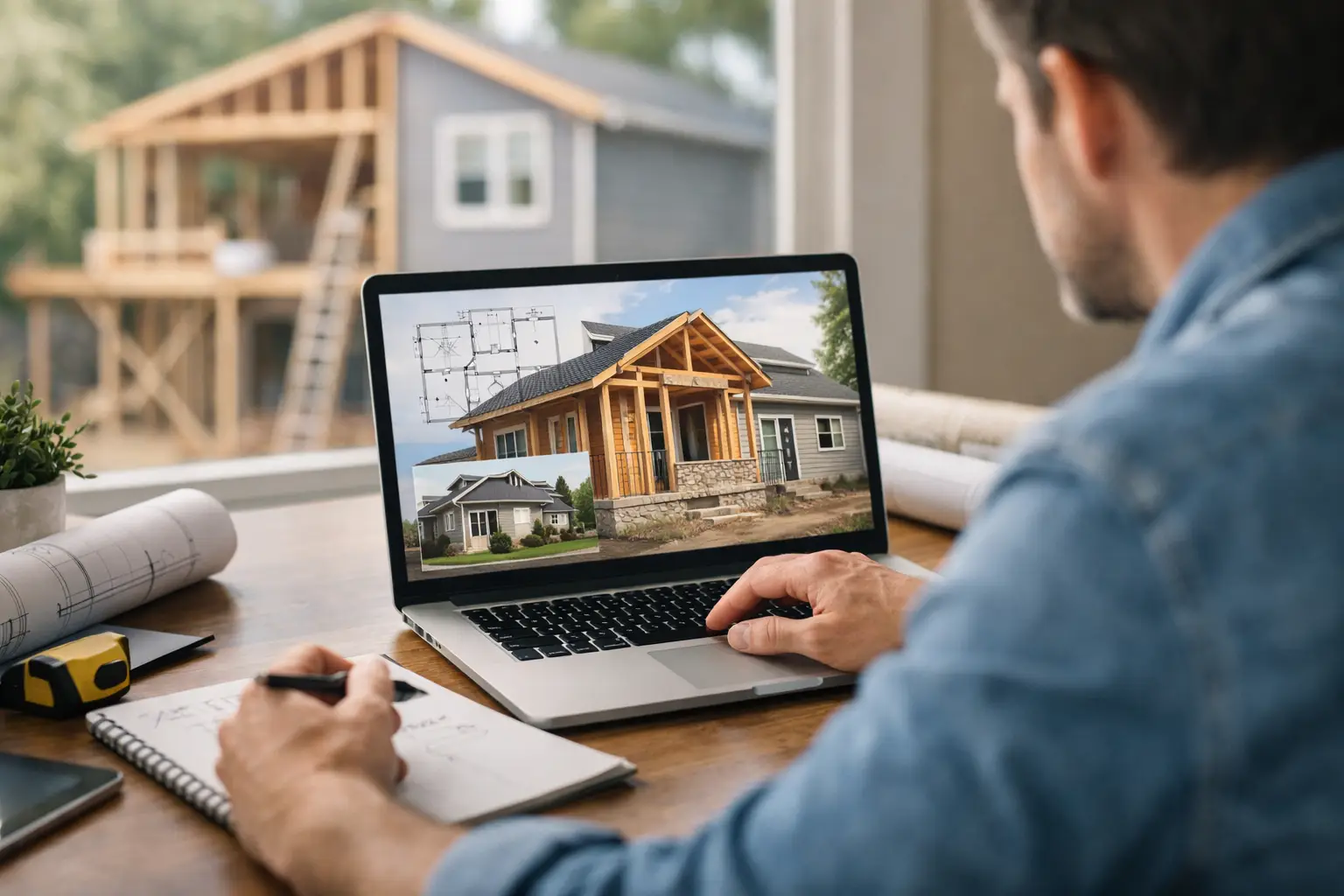
A lot of home addition problems start long before construction. They begin when a homeowner spends money on plans without knowing whether the idea truly fits the house, the lot, the budget, or the way the family actually lives. That is where expert addition advice online can be especially valuable. Done well, it gives you experienced guidance early, when small course corrections are still affordable.
Most homeowners do not need a contractor first. They do not always need full architectural drawings first, either. What they often need first is perspective – someone to help them sort through options, identify likely challenges, and decide what direction makes sense before they commit to design fees or construction proposals.
Why online advice makes sense at the beginning
The early planning stage is where the biggest questions tend to live. Should you build out or up? Is the kitchen really too small, or is the layout the bigger problem? Would a family room addition improve daily life, or would a reworked first floor do more with less cost? These are not contractor questions as much as strategy questions.
Online consultation works well here because the first stage of a home addition is less about swinging a hammer and more about thinking clearly. An experienced advisor can review your home, discuss your goals, look at photos, floor plans, surveys, or sketches, and help you understand what appears realistic. You can get a second opinion before the project develops momentum in the wrong direction.
For many homeowners, this is also a more practical way to access specialized experience. You are not limited to whoever happens to be nearby. You can get thoughtful planning guidance from someone who has seen many addition types, many house styles, and many planning mistakes over the years.
What expert addition advice online should actually help you do
Good advice should do more than reassure you that your idea sounds nice. It should help you evaluate the project honestly.
Clarify what problem you are solving
Homeowners often say they need more space, but square footage is not always the real issue. Sometimes the problem is poor circulation, awkward room relationships, lack of storage, or a floor plan that no longer matches the household. Adding 500 square feet to the wrong part of the house can still leave you frustrated.
An experienced advisor should ask how you live in the home now, what feels cramped or inefficient, and what you want the addition to change. That conversation usually leads to better decisions than starting with a rough square-foot target.
Test feasibility before spending heavily
Not every addition idea is equally workable. Lot setbacks, roof lines, window placement, stair location, structural realities, and the character of the existing house all matter. Some concepts can be made to work, but only at a cost that surprises homeowners later.
This is where a feasibility review becomes useful. You want to know whether the project direction is straightforward, moderately complex, or likely to become expensive because of the house itself. That does not produce final construction pricing, but it can save you from investing in plans built around a weak concept.
Protect the character of the original home
One of the most common regrets with additions is that the new space feels tacked on. The proportions may be off. The roof may look forced. The interior may function better, but the exterior no longer feels cohesive.
A seasoned home addition specialist looks at more than usable area. They consider whether the new work belongs with the original house. That matters for curb appeal, resale, and your own satisfaction. A well-planned addition should look and feel as though it was always meant to be there.
The value of independent expert addition advice online
Independent advice matters because the early planning stage can be influenced by the priorities of whoever you hire first. A contractor may naturally think in terms of buildability and project scope. A designer may begin exploring creative possibilities. Both can be valuable, but neither is fully independent if they are also trying to secure the next phase of work.
Expert addition advice online from an independent advisor serves a different role. It helps you step back before you are committed to one path. You can compare options, talk through trade-offs, and ask questions that are easier to ask when no one is trying to sell construction or design services.
That independence is especially helpful when you are weighing choices such as moving versus adding, first-floor expansion versus second-story addition, or modest reconfiguration versus major new square footage. There is rarely one universal right answer. It depends on your house, your budget, your goals, and how long you expect to stay.
What to prepare before getting advice
The more clearly you present your home and your goals, the more useful an online strategy session will be. You do not need a polished presentation, but a few basic items help a great deal.
If you have an existing floor plan, survey, or old listing sketch, gather it. Take clear photos of the front, back, and key interior spaces. Write down what is not working in the house and what you hope to gain. It also helps to note whether you have spoken with your town, homeowners association, or any local professionals yet.
Most important, be honest about budget range and priorities. If your budget has limits, that does not make the project impossible. It simply shapes the conversation. A good advisor can only guide you well if the real constraints are on the table.
Questions worth asking during an online addition consultation
A productive consultation should leave you with more clarity, not more confusion. Ask questions that help you make decisions, not just dream about possibilities.
For example, ask whether your idea suits the house or fights it. Ask what part of the concept seems strongest and what seems most vulnerable. Ask where homeowners in similar situations tend to overspend or make planning errors. Ask whether the project should move to an architect next, a local design-build firm, or whether more concept development is needed first.
You should also ask what you are not seeing yet. That question alone can be worth a great deal. In many projects, the biggest value comes from identifying issues before they become expensive revisions.
What online advice can and cannot do
It helps to keep expectations realistic. Online guidance can provide strategy, concept feedback, feasibility insight, and a clearer roadmap. It can help you compare options and avoid weak decisions. It can prepare you to hire the right local professionals with better questions and more confidence.
What it cannot do is replace local code review, engineering, permit approvals, or on-site field verification. A remote advisor can identify likely concerns, but final design and construction decisions still need to account for local conditions and regulations.
That is not a weakness of online consultation. It is simply the proper role of early-stage advice. The goal is not to do every part of the project remotely. The goal is to help you start smart.
When homeowners benefit most from expert addition advice online
This kind of guidance is especially useful when you are still sorting out direction. Maybe you have two or three possible addition ideas and are not sure which deserves further investment. Maybe you have already received conflicting opinions from contractors. Maybe you have sketches, but something about the layout still feels off. Maybe you are worried that your budget and your wish list are not aligned.
These are exactly the moments when experienced guidance can change the outcome of the project. Once plans are advanced and fees are spent, people become attached to decisions they should have challenged earlier.
Addition Doctors was built around that early planning gap – helping homeowners think clearly before the expensive parts begin. That role is often less dramatic than construction, but it is where many of the best decisions are made.
A better first step than rushing ahead
Homeowners are often told to start by calling a contractor or hiring a designer. Sometimes that is appropriate. But when the project is still full of questions, the better first step is often slower and more thoughtful. Independent planning advice helps you understand the house you have, the space you truly need, and the trade-offs that come with each option.
That kind of clarity does not make the decisions easy, but it does make them better. And before you spend serious money on drawings, bids, or contracts, better decisions are exactly what you want.