
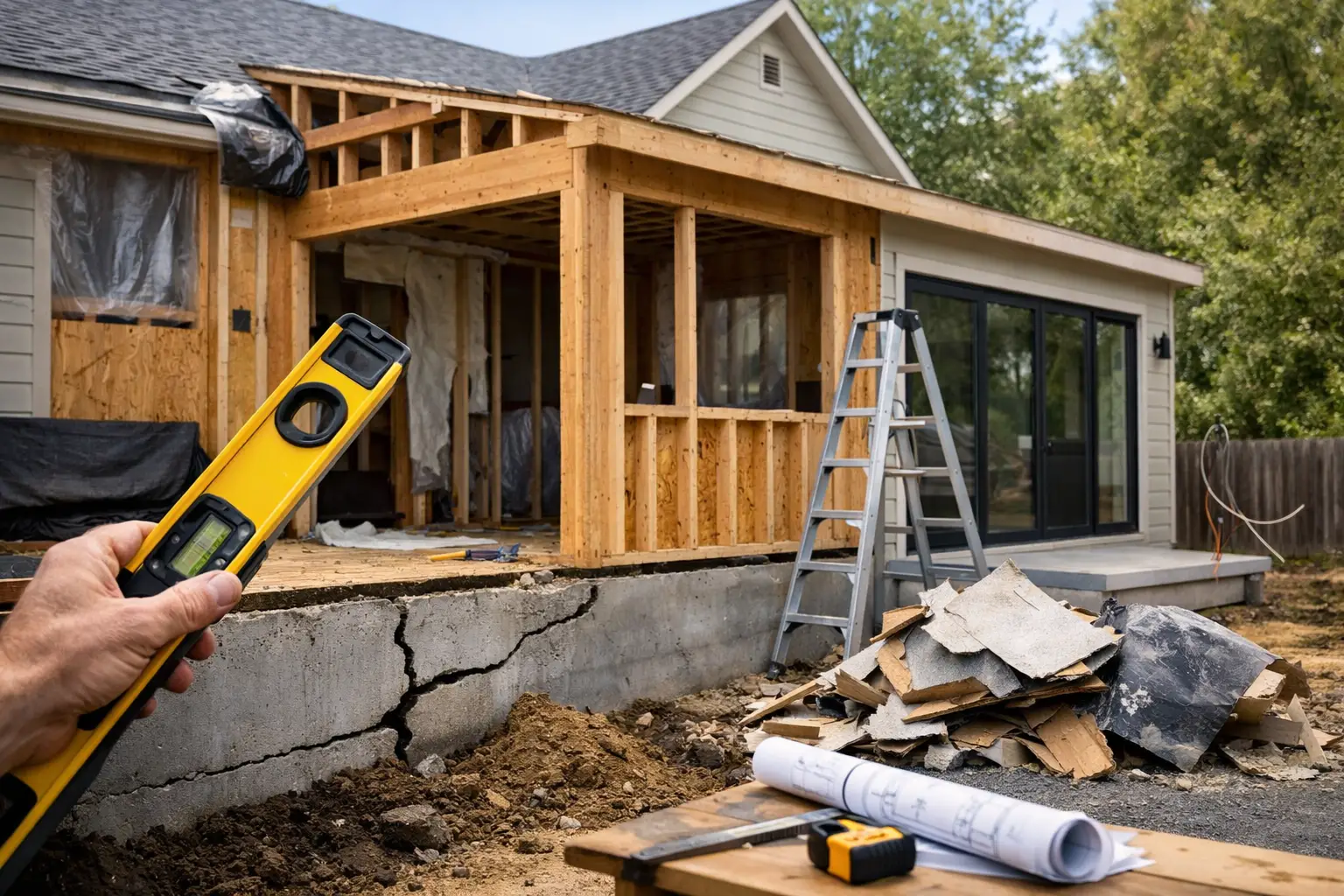
A lot of home additions go off track before a contractor is ever hired. The early decisions – how much space you need, where it should go, what it should cost, and who should help you plan it – often determine whether the project feels smart and worthwhile or frustrating and expensive. If you are researching home addition mistakes to avoid, you are asking the right question at the right time.
After decades of designing and building additions, one pattern shows up again and again: homeowners usually do not get into trouble because they had a bad idea. They get into trouble because they moved too quickly from idea to drawings to pricing, without enough thoughtful planning in between. A successful addition starts with clarity, not just enthusiasm.
The most common home addition mistakes to avoid start before design
Many people assume the first step is to call an architect or contractor and ask for plans. Sometimes that is appropriate. But often, the better first move is to step back and define the problem clearly.
Are you short on space, or is the current layout simply not working? Do you need another bedroom, or do you need better circulation, storage, and privacy? Is the goal resale value, long-term livability, multigenerational use, or aging in place?
Those questions matter because different goals lead to very different projects. A family room addition, a reworked first floor, or a second-story expansion can all solve a space problem, but not equally well. When homeowners skip this strategy stage, they often spend money designing the wrong solution.
Mistake 1: Adding space without defining the real need
Square footage is not the same thing as function. One of the most expensive planning errors is assuming more room automatically solves the problem.
In practice, many homes feel cramped because of poor layout, undersized rooms in the wrong places, or missing connections between spaces. A thoughtful addition should respond to how the household actually lives. That might mean a modest kitchen expansion with better flow instead of a large rear addition. It might mean a first-floor primary suite instead of a full second story.
This is where experienced guidance matters. Before anyone starts sketching, it helps to identify what the new space must do, what it would be nice for it to do, and what trade-offs are acceptable.
Mistake 2: Ignoring how the addition will look from the outside
A home addition can add value, comfort, and functionality. It can also make a house look awkward if the proportions, rooflines, windows, and massing are not carefully studied.
This is one of the most overlooked home addition mistakes to avoid because homeowners tend to focus on interior square footage. But from the street, a poorly planned addition can feel tacked on, oversized, or out of character with the original house.
The best additions do not call attention to themselves as separate projects. They look and feel like they belong. That does not always mean copying every existing detail exactly, but it does mean respecting scale, proportion, roof geometry, and architectural rhythm. A large addition may be possible on paper and still be the wrong fit for the house.
Mistake 3: Assuming the lot can support what you want to build
Before design moves too far, feasibility needs to be tested. Setbacks, lot coverage limits, easements, septic constraints, utility locations, topography, drainage, and zoning rules can all limit what is possible.
Homeowners are often surprised by this. They see plenty of yard area and assume they have plenty of buildable area. Those are not always the same thing.
A second-story addition may avoid some site limitations but create structural and cost challenges. A rear addition may seem straightforward but run into setback or drainage issues. A side addition may work dimensionally but disrupt access, windows, or driveway function. Early feasibility review can save months of wasted effort and redesign.
Mistake 4: Starting with a budget that is hopeful instead of realistic
This is where good projects begin to unravel. If the budget is far below the likely cost of the work, every next decision gets distorted.
Homeowners often set budgets based on older numbers, online estimates, or what a neighbor spent years ago. But addition costs vary widely based on region, scope, structure, finishes, complexity, and how much existing space must be reworked. A simple bump-out is very different from a full primary suite, a garage with living space above, or a second-story addition.
A realistic budget is not just a construction number. It should account for design fees, engineering, permits, site work, possible utility upgrades, interior renovations tied to the addition, and a contingency for surprises. If your numbers only work in a best-case scenario, you do not yet have a reliable project roadmap.
Mistake 5: Designing too much before testing cost and scope
It is easy to fall in love with a plan before you understand what it will take to build it. That is human nature. The problem is that once homeowners become attached to a layout, scaling it back becomes emotionally difficult.
A better process is to test broad concepts early. Compare options. Ask what each version is likely to cost, what structural implications it creates, and whether the added square footage is earning its keep. Sometimes reducing the footprint slightly produces a much better balance between cost and function.
This is one reason independent planning advice can be so valuable. When no one is trying to sell design hours or construction work, the conversation can stay focused on whether the idea makes practical sense.
Mistake 6: Hiring the first professional before knowing what role you need
Homeowners often ask whether they should hire an architect, designer, design-build firm, or contractor first. The answer depends on the project, but the wrong sequence can create confusion and unnecessary expense.
If the project goals are still fuzzy, jumping straight into full design may be premature. If the concept is already clear and feasibility has been thought through, then design may be the logical next step. If pricing is needed, the level of plan detail matters. If structural complexity is high, engineering may need to come in earlier.
The key is not choosing a professional based only on who answered the phone first. It is understanding what decision needs to be made next and what kind of expertise best supports that decision.
Mistake 7: Underestimating the impact on the existing house
An addition does not exist in isolation. It connects to a real house with real limitations.
Sometimes the most expensive part of an addition is not the new space. It is what has to happen where old meets new. Roof framing may need major revision. Mechanical systems may need upgrades. Existing rooms may need to be reconfigured to create proper flow. Foundations, ceiling heights, floor levels, and window alignment can all complicate the design.
This is why two additions of similar size can have very different costs. One slips into the existing house relatively cleanly. The other triggers a chain reaction of structural and interior changes. Looking at square footage alone rarely tells the full story.
Mistake 8: Focusing on resale without thinking about daily life
Resale matters, but it should not be the only lens. A project can add theoretical value and still be a poor fit for how you want to live.
For example, a large addition may look appealing from an appraisal standpoint, but if it eats up the yard, darkens the kitchen, or creates awkward circulation, you may not enjoy it. On the other hand, a more modest project that improves privacy, storage, and function can make the house feel dramatically better even if it is less flashy.
The right question is usually not, Will I get every dollar back? It is, Will this improve the house in a way that makes sense for our plans, our neighborhood, and our investment level?
Mistake 9: Comparing contractor bids without understanding what is included
By the time bids arrive, many homeowners feel they are near the finish line. In reality, this is another point where mistakes can become expensive.
Bids are only comparable if the scope, assumptions, and level of detail are comparable. One proposal may include allowances that are unrealistically low. Another may exclude site work, painting, flooring, or permit-related costs. A lower number is not necessarily a better number if important work has been left vague or omitted.
This is where careful review matters. Ask what is included, what is excluded, what assumptions were made, and where costs may move. A clear bid does more than give a price. It helps reveal how carefully the contractor understands the project.
Mistake 10: Treating planning as a delay instead of protection
Many homeowners worry that spending more time up front will slow the project down. In reality, rushed planning is often what causes the biggest delays later.
Changes during design, permit review, or construction are usually far more expensive than changes made while you are still evaluating options. Thoughtful planning is not wasted time. It is protection against rework, budget shocks, and regret.
That is especially true when the project is complex, the budget matters, or the home has architectural character worth preserving. A good addition should not just add room. It should feel well considered, financially grounded, and naturally connected to the house you already own.
If you are still sorting through options, this is the stage where a second opinion can make a real difference. Addition Doctors exists for exactly that early planning moment – helping homeowners evaluate possibilities, understand trade-offs, and move forward with a clearer roadmap before major commitments are made.
The best time to avoid a costly mistake is before it becomes part of the plan.