
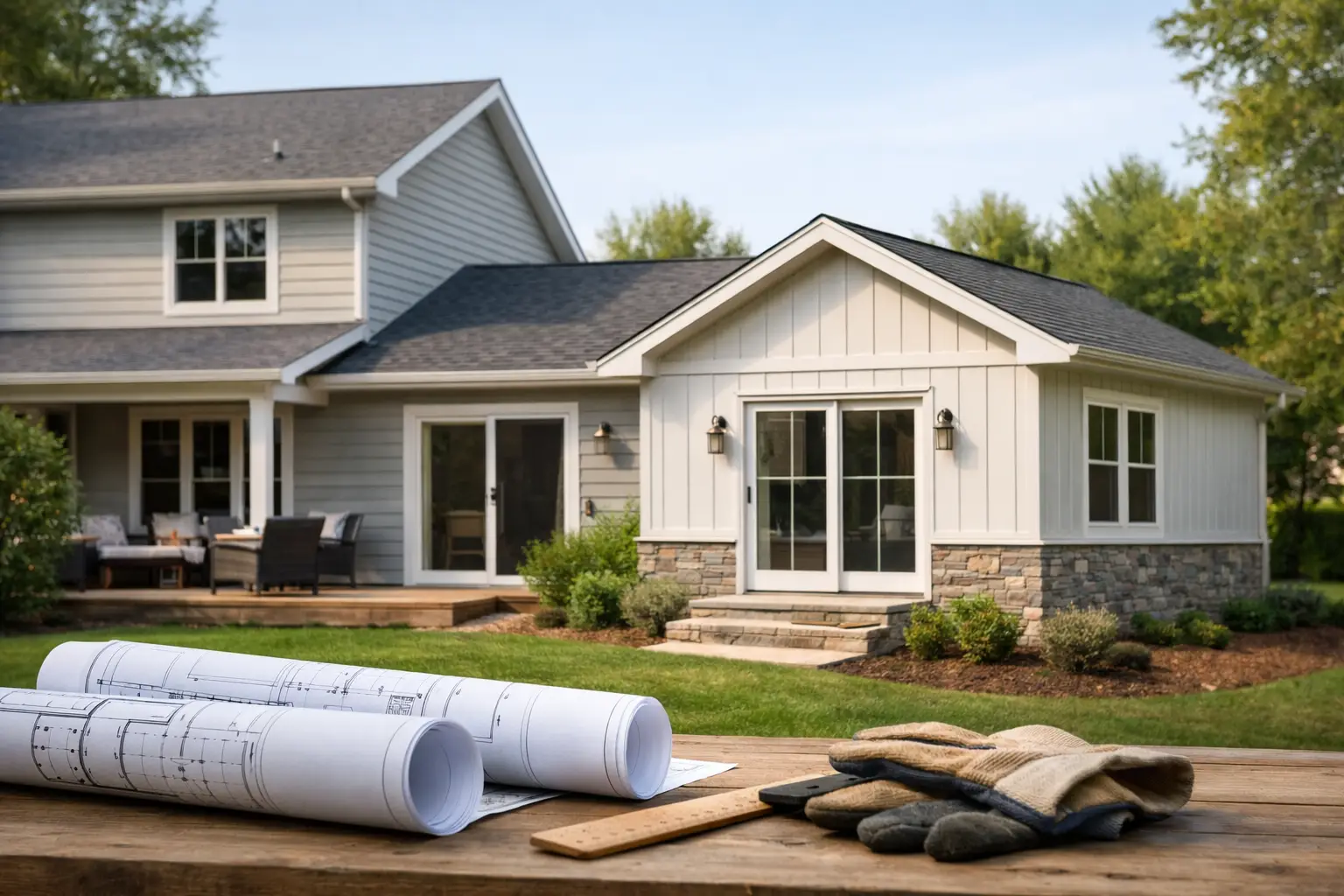
The question usually shows up early, often before there is a sketch, a budget, or a clear scope: will a home addition match my house? That is exactly the right time to ask it. Once plans are underway, homeowners often discover that making an addition fit is not just about copying siding or roof shingles. It is about proportion, placement, scale, rooflines, windows, floor heights, and how the new space feels when you walk through it.
After decades of working on additions, I can tell you this much with confidence: yes, an addition can match your house beautifully. But it does not happen automatically, and it rarely happens just because someone says they will “tie it in.” The best results come from thoughtful planning before you hire a designer or contractor and before the project starts drifting toward whatever is easiest to build.
What makes a home addition feel like it belongs
When homeowners ask whether a new addition will match, they are usually talking about appearance. That matters, of course, but visual compatibility is only part of the answer. A successful addition also needs to feel natural from the inside.
From the street, the new work should respect the original house. That does not always mean making the addition invisible. In some cases, a well-designed addition can be clearly newer while still feeling appropriate. The real test is whether the home still looks balanced. If the new section overwhelms the original structure, sits awkwardly on the lot, or introduces shapes and details that compete with the house, it will feel added on rather than integrated.
Inside, the transition matters just as much. Ceiling heights, floor levels, room proportions, and circulation patterns all affect whether the addition feels like part of the home or like a disconnected wing. Many disappointing projects look acceptable outside but feel clumsy once you step through the opening between old and new.
Will a home addition match my house if we copy the existing style?
Sometimes yes, sometimes no.
Copying the original house can work very well, especially with homes that have clear architectural character and straightforward detailing. If you have a Colonial, Cape, ranch, or traditional two-story home, a carefully designed addition that follows the same roof pitch, window rhythm, trim proportions, and massing can look as though it has always been there.
But copying can also go wrong. Homeowners are often told that matching means using the same siding, same shingles, same window grid, and same paint color. Those details help, but they are surface-level decisions. If the addition is too tall, too bulky, too deep, or attached in the wrong place, matching materials will not save it.
There is also the issue of the existing home itself. Not every house has a pure or consistent style. Many have already been altered over time. In that case, trying to mimic every detail can create a confused result. A better approach may be to respect the home’s scale and proportions while simplifying some of the architectural language.
This is where experienced guidance matters. The goal is not to force an addition to be a perfect replica. The goal is to make sure the whole house feels coherent when the project is done.
Where matching projects usually go wrong
Most mismatched additions are not the result of one bad decision. They are the product of several small compromises made too early.
A common problem is starting with square footage instead of design fit. A homeowner may need a larger kitchen, family room, or primary suite, which is reasonable. But when the conversation becomes only about how much space can be added, the project can lose touch with the house. Bigger is not always better if the new volume throws off the balance of the structure.
Rooflines are another frequent trouble spot. Roof design is one of the strongest visual signals that an addition belongs or does not. When a roof is forced into place without enough thought, the result can look awkward even to someone who cannot explain why. Strange valleys, flat transitions, clipped eaves, or mismatched pitches tend to make an addition look patched together.
Window placement causes problems too. Homeowners often focus on getting more light, which is understandable, but the exterior composition matters. If window sizes, head heights, spacing, and proportions do not relate to the original house, the new section can feel off.
Then there is the issue of floor alignment. If the addition creates odd steps, sloping transitions, or abrupt ceiling changes, the interior will never feel fully integrated. Sometimes those compromises are unavoidable because of site conditions or existing structure. But they should be understood early, not discovered halfway through design.
The factors that determine whether an addition will fit
The house itself is only one part of the equation. The lot, neighborhood, and existing layout all influence what kind of addition makes sense.
A rear addition may be easiest to blend because it has less impact on the front appearance. A side addition can work well too, but only if there is enough width on the lot and the addition does not make the house feel lopsided. Front additions are usually the hardest to pull off gracefully because they change the first impression of the home.
Second-story additions deserve especially careful planning. They can solve space problems efficiently, but they also have the greatest potential to change the character of the house. A one-story ranch can sometimes handle a second floor well, but sometimes the proportions become top-heavy. It depends on the width of the house, roof form, window organization, and whether the original home has enough visual presence to support the added mass.
Neighborhood context matters as well. Even if an addition technically matches your house, it may still feel out of place if it ignores the scale and character of nearby homes. That may or may not matter to you personally, but it can affect curb appeal and resale.
How to evaluate if your addition concept will really match
Before you spend significant money on design, take a step back and study the house honestly.
Start with the basic shape. Is your home simple and compact, or does it already have many jogs and intersecting rooflines? Simpler houses often benefit from simple additions. Trying to create too many architectural gestures usually makes things worse.
Next, look at proportion. Does the proposed addition feel subordinate to the original house, or is it trying to become the main event? In many successful projects, the original home still reads clearly even after the addition is complete.
Then consider the connection point. Where old and new meet is one of the most important design decisions in the project. If that connection is awkward, the whole addition will feel awkward. This is true both outside and inside.
It also helps to ask a more practical question: what are you willing to change on the existing house to make the addition work properly? Sometimes a truly integrated result requires more than attaching a new room. It may require reshaping part of the roof, relocating windows, reworking circulation, or updating exterior details across the whole house. Homeowners who understand that early tend to make better decisions than those hoping the addition can be treated as a completely separate piece.
Why early planning matters more than most homeowners expect
This is where many costly mistakes begin. Homeowners often assume they should hire a designer, ask for plans, and let the process sort itself out. But if no one has helped you think through fit, feasibility, and trade-offs first, you may spend money developing a concept that was never the right answer for your house.
An independent planning discussion can be extremely valuable at this stage. Before committing to full design work, it helps to evaluate what type of addition makes sense, where it should go, what limitations the house presents, and what level of exterior and interior change will likely be required to make it feel natural.
That kind of early guidance is not about slowing the project down. It is about creating a smarter roadmap. In many cases, a modest shift in size, location, or layout can dramatically improve how well the addition fits the home.
A good match is not always a perfect disguise
Some of the best additions do not pretend they are original down to every last detail. They respect the house without becoming a fake historical copy. This is especially true for older homes where exact materials may no longer be available or where modern construction methods create subtle differences.
What matters most is harmony. The addition should feel consistent with the house in scale, character, and quality. It should not look like it landed from another property, and it should not feel like an afterthought inside.
If you are asking, will a home addition match my house, you are already asking one of the smartest questions in the process. The answer is often yes, but only when the project starts with careful evaluation rather than assumptions. A well-planned addition should not just give you more space. It should make your home feel more complete than it did before.