
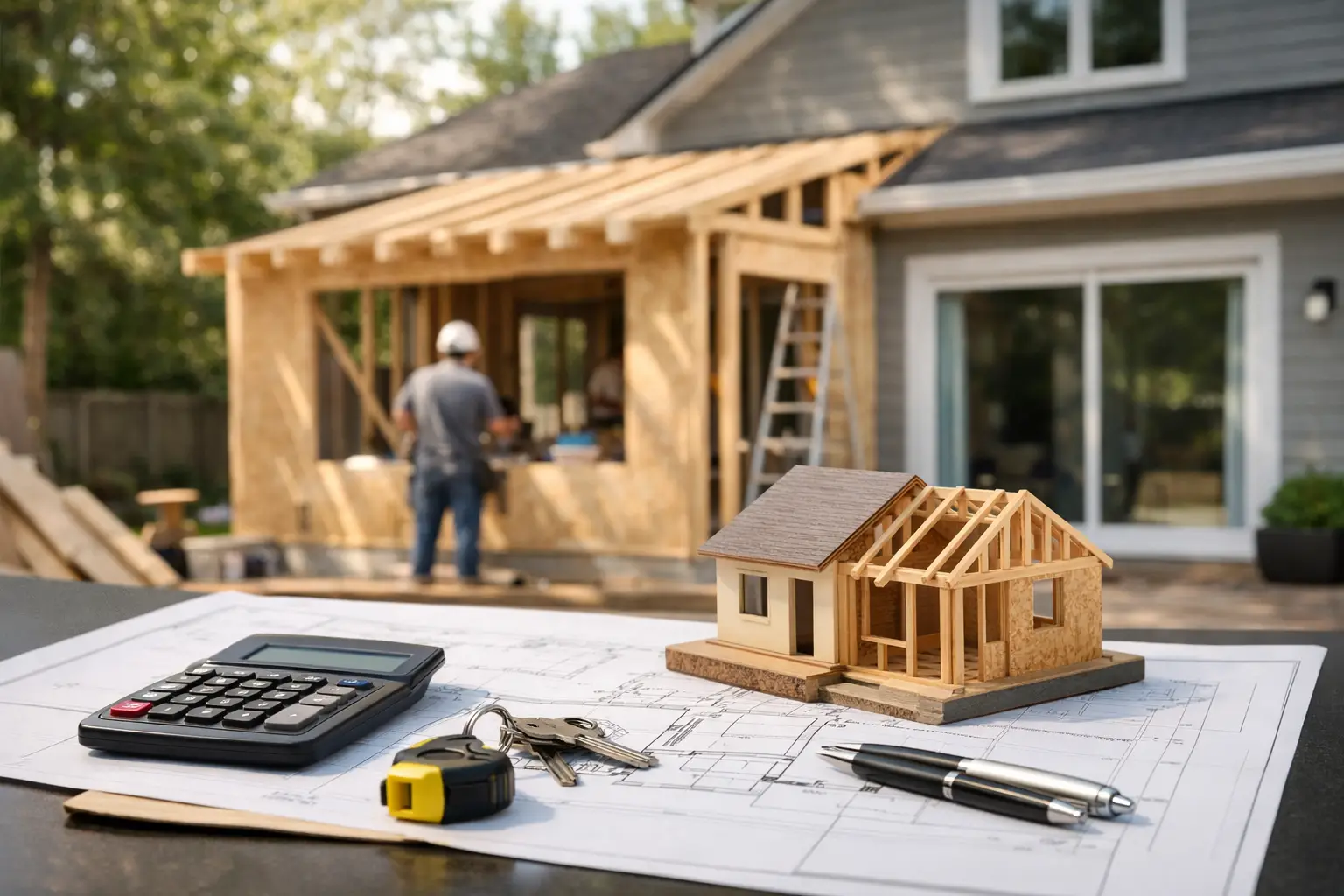
Most homeowners do not get into trouble with an addition because they wanted too much. They get into trouble because they started spending money before they had a clear framework for home addition cost planning. A sketch gets drawn, a wish list grows, and then the bids come back far above what anyone expected.
That usually happens in the early planning stage, not in construction. If you want a realistic budget, you need to think about cost before you hire the full design team, before you request contractor pricing, and before you get attached to a layout that may not fit your budget.
What home addition cost planning really means
Good home addition cost planning is not guessing a price per square foot and hoping it works out. It is the process of matching your goals, your house, and your financial comfort level before design decisions become expensive to reverse.
A thoughtful budget starts with three questions. What problem are you trying to solve? How much change does the house actually need? And what level of investment makes sense for your family, your neighborhood, and your long-term plans?
That sounds simple, but this is where many projects drift off course. Homeowners often budget for the room they want, not the full project required to make that room work. A new primary suite may also require foundation work, roof tie-ins, HVAC upgrades, drainage changes, permits, structural engineering, interior remodeling, and finish work in existing spaces. The addition is only part of the cost.
Start with the real scope, not the dream version
One of the most common planning mistakes is treating every idea as essential. Early on, it helps to separate needs from preferences. If your family needs a first-floor bedroom for aging in place, that is a different project than wanting a luxury suite with vaulted ceilings, a sitting room, and a spa bath.
This does not mean lowering your standards. It means understanding what is driving cost. Square footage matters, but so do complexity, structural changes, plumbing locations, roof design, and how well the new space connects to the original house.
A simple rectangular family room addition on level ground may be relatively straightforward. A second-story addition over an older house with framing limitations is a very different budget conversation. So is an addition that forces major reworking of the kitchen, stairs, or utility systems.
That is why the earliest budget conversation should focus less on finishes and more on project type. The shape of the project usually determines the budget range long before countertops and fixtures enter the picture.
The cost drivers homeowners often miss
When homeowners plan an addition, they usually notice the visible parts first. They think about the new bedroom, larger kitchen, or office space. What they often miss are the hidden conditions that make one project affordable and another much more expensive.
Site conditions can change the picture quickly. Slope, drainage, tree removal, access for equipment, and local setback requirements all affect cost. Existing house conditions matter too. If the original structure is out of level, underframed, or carrying outdated systems, the addition may trigger upgrades you were not expecting.
Then there is integration. The best additions look and feel like they belong to the original home. Achieving that often takes more thought and money than homeowners first assume. Matching roof lines, floor heights, window proportions, exterior materials, and interior circulation can add complexity, but it usually creates a far better result.
This is where experienced guidance is valuable. A project that looks efficient on paper may be awkward, overbuilt, or poorly connected in real life. Saving money on the wrong concept rarely saves money overall.
How to set a realistic budget range
A useful addition budget is a range, not a single number. Early planning is about establishing a likely investment level and understanding what that range can reasonably buy.
Begin with a total project budget, not just construction. Include design fees, engineering if needed, permits, surveys, possible zoning or code work, and a contingency. If you are financing the project, include carrying costs and allow room for surprises. Older homes, in particular, tend to reveal conditions once walls are opened.
A contingency matters because pricing uncertainty is normal. Even well-planned additions involve some unknowns. The right contingency amount depends on the age of the house, the complexity of the work, and how much of the existing structure will be touched. The more invasive the project, the more protection you should build into the budget.
If your budget is firm, the design needs to respond to that reality. If your goals are firm, then you may need to adjust the budget, the scope, or the timing. That is the trade-off most homeowners eventually face.
Why price-per-square-foot can mislead you
Homeowners often ask for a price per square foot because it sounds like a quick way to estimate cost. It can be a rough reference point, but it is not a planning strategy.
Two additions with the same square footage can have very different costs. A basic bonus room over a garage may price differently from a kitchen expansion with plumbing, structural changes, custom cabinetry, and extensive work in adjacent spaces. The square footage may match. The project complexity does not.
Price-per-square-foot numbers also ignore where the addition meets the existing house. That connection point is often one of the most expensive parts of the job. Opening walls, modifying roofs, adjusting floor levels, rerouting utilities, and making the old and new work together can drive cost in ways a simple formula misses.
Use square-foot estimates only as a broad screen. Real home addition cost planning requires a closer look at the specific house and the specific concept.
Budget decisions that affect value later
Not every dollar spent on an addition has the same long-term value. Some decisions improve daily living and support resale. Others create cost without solving the underlying problem very well.
Projects tend to perform better when they improve function, simplify circulation, and feel consistent with the house. A modest addition that fixes a cramped kitchen and adds a practical family entry may serve a home better than a larger addition that creates awkward rooms or an exterior that looks tacked on.
This matters if you are debating whether to move or add on. The question is not just what the addition costs. It is whether the investment creates a home that works for the next chapter of your life. If the layout problems are deeper than the addition can solve, pouring money into more square footage may not be the best answer.
That is one reason an early feasibility review can be so helpful. Before you spend heavily on plans, it helps to know whether your house can support the project you have in mind in a sensible way.
When to get budget guidance before design
The best time to seek cost guidance is when you are still open to options. Once a homeowner falls in love with one specific design, budget becomes emotional. It is much harder to make practical decisions after that point.
Early guidance helps you compare approaches. Should you build out, build up, reconfigure existing space, or combine a smaller addition with interior remodeling? Those options can have very different cost implications, and the cheapest one is not always the wisest. Sometimes a more efficient layout reduces the amount of new square footage needed. Sometimes a larger addition is justified because it solves multiple problems at once.
An independent advisor can help you think through those trade-offs before an architect draws the full project or a contractor prices a plan that may need major revision. That early clarity can save substantial time and money.
A better way to approach the next step
If you are planning an addition, resist the urge to ask, “What will it cost?” as if there is one simple number. A better question is, “What kind of project fits this house, this budget, and this goal?”
That shift changes everything. It leads to better decisions about scope, smarter conversations with design professionals, and more realistic expectations when bids arrive. It also reduces the risk of spending months pursuing a concept that never had a clear path forward.
After more than four decades in this field, that is the pattern I have seen again and again. The homeowners who do best are not the ones who guess correctly at the start. They are the ones who slow down, ask better questions, and build a realistic roadmap before moving ahead.
A well-planned addition starts long before construction. If you take the time to understand the true scope, likely cost drivers, and practical trade-offs, you give yourself a much better chance of creating space that feels right for both your home and your budget.