
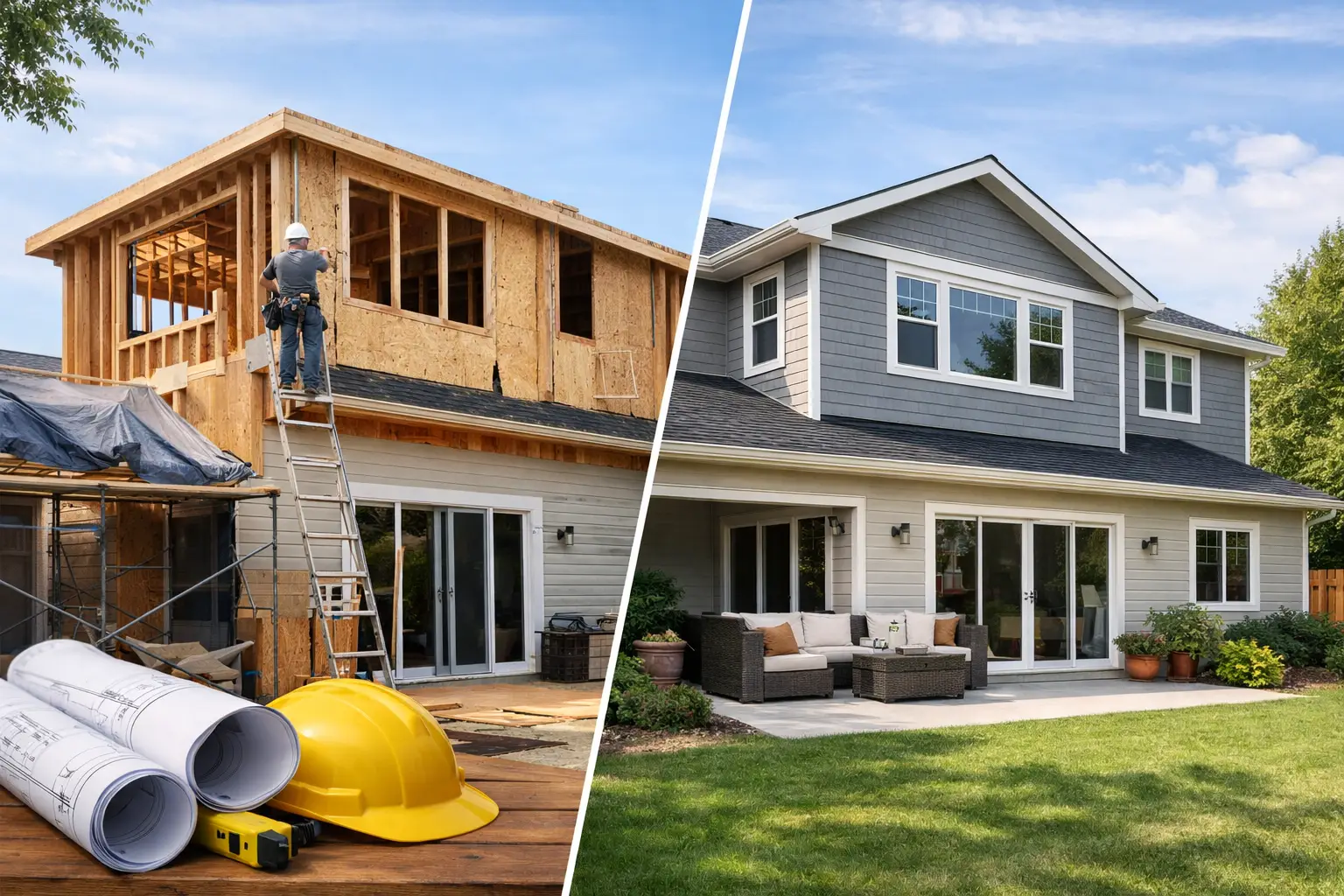
When a house feels too small but the lot is already maxed out, the question usually comes fast: is a second story addition worth it? In some cases, absolutely. In others, it becomes one of the most disruptive and expensive ways to solve a space problem. The right answer depends less on square footage alone and more on your house, your site, your budget, and how long you plan to stay.
A second story addition can be a smart solution when the first floor footprint works, the neighborhood supports the investment, and moving would cost just as much or more. It can also be the wrong move when the existing house is structurally limited, the layout downstairs needs major work anyway, or the added value will not come close to the total project cost. This is why homeowners benefit from independent advice before they hire a designer or contractor. The early planning decisions matter more than most people realize.
When is a second story addition worth it?
The simplest way to look at it is this: a second story addition is worth it when it solves the right problem without creating a bigger one.
If you love your location, need substantially more living space, and have no practical room to expand outward, building up may be your best option. That is especially true in established neighborhoods where lot coverage is tight, setbacks limit first-floor additions, or preserving yard space matters. A second floor can add bedrooms, bathrooms, a primary suite, office space, or even enough room to reorganize the entire house.
But more space upstairs does not automatically fix a poor house plan. I have seen homeowners add a large second floor over a first floor that still had awkward circulation, a cramped kitchen, or a front entry that never worked well. They gained square footage, but not necessarily a better home. That is where thoughtful planning becomes essential. The question is not just how much room you can add. It is whether the overall house will function better when the project is done.
The biggest advantages of building up
The main advantage is obvious: you can gain significant square footage without giving up the yard. For many families, that alone makes the idea attractive. If your home sits on a small lot, or if outdoor space is important for children, pets, entertaining, or future resale, going up may protect something you do not want to lose.
A second story addition can also create a more logical separation between public and private spaces. Bedrooms upstairs and living areas downstairs often make a house feel more organized and more comfortable for daily life. In some homes, that shift improves the usefulness of the entire layout, not just the added rooms.
There is also a neighborhood factor. In areas where many homes have already been expanded vertically, a well-designed second story may feel like a natural evolution rather than an over-improvement. When the addition fits the scale, rooflines, and character of the original house, it can make the home feel more complete instead of top-heavy or obviously altered.
Why second story additions get expensive fast
This is where homeowners need realistic expectations. A second story addition is rarely just about adding rooms on top. You are asking the existing house to support new structure, new systems, new stairs, and a new exterior composition. That affects almost every part of the project.
The structure is one of the first unknowns. Can the existing foundation and framing carry the added load? Sometimes yes, sometimes not without reinforcement. If significant structural work is required below, the cost climbs quickly.
Then there is access and circulation. A staircase takes more space than many homeowners expect, and where it lands matters. If the stair location disrupts the first-floor plan, you may need more remodeling downstairs than you anticipated. That can turn a second story addition into a partial whole-house reconfiguration.
Mechanical systems often need attention too. Heating and cooling, plumbing, electrical service, and sometimes water pressure all need to be evaluated. An older home may already be near its limits. Once you add a full second floor, those existing systems may no longer be adequate.
Roof removal and weather exposure also add complexity. Unlike many first-floor additions, building upward often means opening much of the house to major construction. Temporary protection, phased work, and schedule coordination become critical. That is one reason second story additions are often more disruptive than homeowners imagine.
Is a second story addition worth it financially?
This is usually the hardest part of the decision because cost and value do not always move together.
A second story addition can make financial sense if moving would require buying a much more expensive home in the same area, paying higher property taxes, and giving up a favorable mortgage rate. In markets with limited housing inventory, adding on may be the more rational long-term choice even if construction costs are high.
But homeowners should be careful about assuming they will recover every dollar spent. Some projects add meaningful market value. Others primarily add personal value. Those are not the same thing.
For example, adding a second floor to create badly needed family space in a location you intend to stay in for 10 or 15 years may be entirely worth it, even if resale value does not match project cost dollar for dollar. On the other hand, if you are stretching financially and hoping the market will justify every design decision, that is riskier.
A good planning exercise is to compare three numbers: what the project is likely to cost, what your home may reasonably be worth afterward, and what it would cost to buy a better-fitting home instead. That comparison often brings clarity. It may not produce a perfect answer, but it will show whether your thinking is grounded in reality.
Design fit matters more than many homeowners expect
One of the biggest mistakes in second story planning is treating the addition like a separate object sitting on top of the house. The best projects do the opposite. They make the home look and feel as though it always belonged that way.
That requires careful attention to proportions, roof shape, window alignment, massing, and how the new upper level meets the original structure. Some homes accept a second story gracefully. Others fight it. A small ranch, cape, or low-profile mid-century house may need much more design discipline to carry a second floor well.
This is one reason a feasibility review can be so valuable early on. Before spending heavily on plans, homeowners should understand whether the house has the right bones and architectural character for this kind of expansion. A project can be technically possible and still be visually wrong.
When a second story addition may not be worth it
Sometimes the wiser answer is to stop forcing the idea.
If the first floor already needs extensive renovation, the lot allows a well-placed rear or side addition, and the cost of building up is dramatically higher, a first-floor expansion may be the better investment. If the neighborhood values modest homes and your project would far exceed local expectations, the return may be limited. If someone in the household needs single-level living now or in the near future, adding bedrooms upstairs may solve one problem while creating another.
There are also cases where moving simply makes more sense. If your existing house has multiple fundamental limitations, such as poor orientation, a difficult lot, chronic structural issues, or a layout that cannot be corrected efficiently, a second story addition can become an expensive attempt to rescue the wrong house.
Questions to answer before moving forward
Before you hire an architect or talk seriously with contractors, you want clear answers to a few planning questions. Can the house support a second floor without excessive structural work? Where will the stair go, and what will it do to the first-floor layout? Will the finished home still look proportionate from the street? How much downstairs remodeling is really part of the project? And just as important, does this option outperform moving or expanding outward?
These are not details to sort out after design begins. They shape the entire project roadmap.
Homeowners often come into the process thinking the decision is mainly about cost per square foot. It is not. It is about feasibility, livability, design fit, disruption, and long-term value. Those are exactly the areas where experienced guidance can prevent expensive missteps.
A second story addition is worth it when it improves the house in a meaningful, lasting way and when the numbers, design, and lifestyle goals all point in the same direction. If those pieces are not lining up yet, that is not a sign to push harder. It is a sign to slow down and make sure you are solving the right problem before you commit to a very big project.