
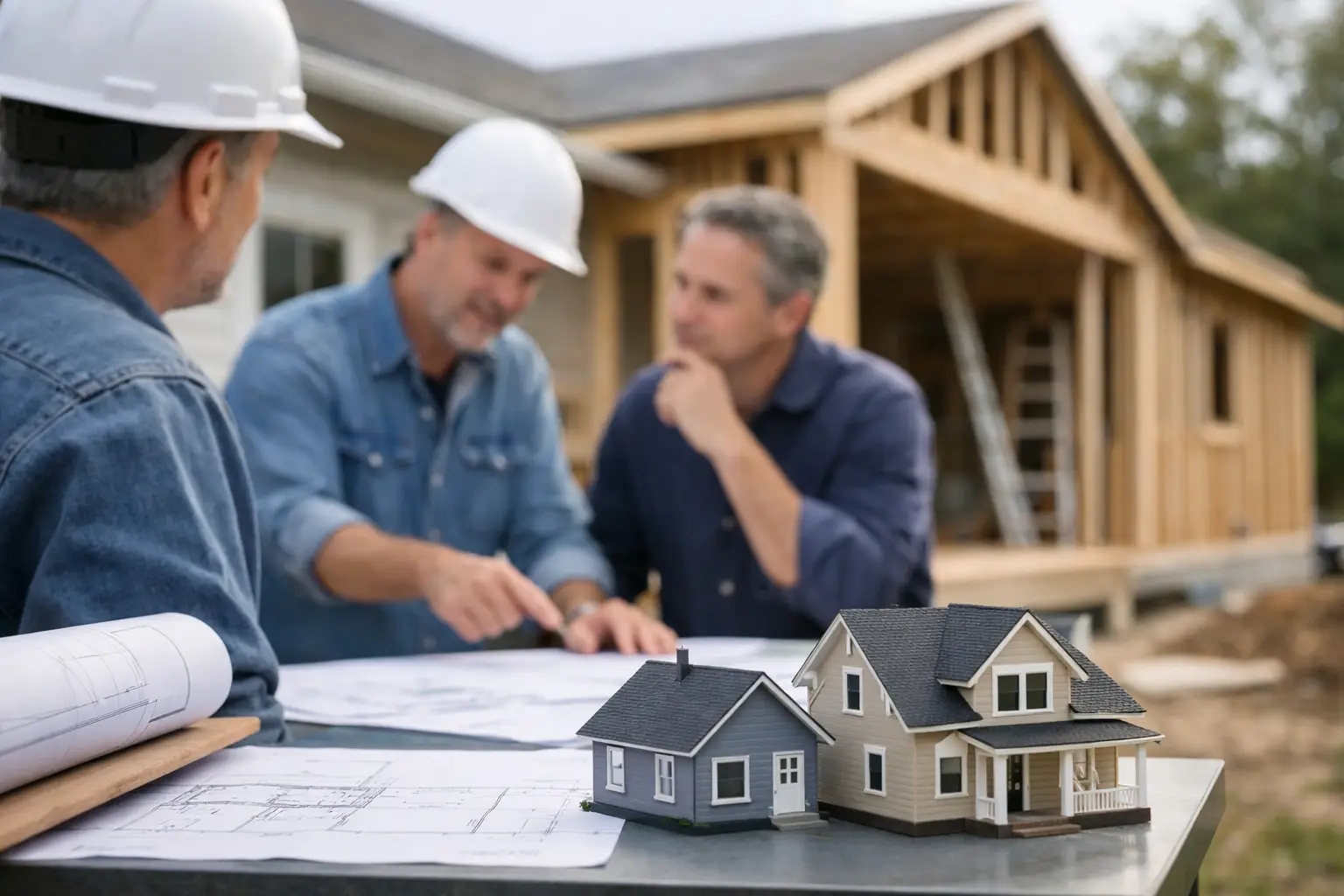
The moment many homeowners realize they need a home addition second opinion is not when a contractor shows up. It is earlier, usually after the first sketch, the first budget number, or the first confident recommendation that somehow does not quite sit right. You may be excited about the possibilities, but if the plan feels too expensive, too large, too awkward, or too rushed, that hesitation is worth paying attention to.
A home addition is not just extra square footage. It changes how your house works, how it looks from the street, how rooms connect, and how money gets spent. Once plans are developed and fees start adding up, it becomes harder to step back and ask whether the project is actually headed in the right direction. That is why a second opinion can be so valuable early on.
What a home addition second opinion really does
A second opinion is not about undermining an architect, designer, or contractor. It is about giving the homeowner an independent way to evaluate the direction of the project before momentum takes over. In many cases, the first idea presented is only one possible solution. It may be a good one, but it may not be the best fit for your house, your budget, or the way your family actually lives.
An experienced second opinion looks at the bigger picture. Does the addition solve the right problem, or is it simply adding space because that seems like the obvious answer? Is the layout improving flow, natural light, privacy, and everyday function? Will the addition feel like part of the original house, or will it read like an afterthought? Those questions matter just as much as square footage and cost.
It also helps identify issues that are easy to miss when everyone is focused on moving forward. Roof lines, window alignment, exterior proportions, structural complexity, and circulation patterns can have a major impact on both budget and long-term satisfaction. Many expensive mistakes begin as small planning decisions that no one challenged early enough.
When a second opinion makes the most sense
Not every project needs one, but certain situations are strong signals.
If you have received a concept plan and your reaction is, “I guess this works,” that is often reason enough to pause. Homeowners should not need to talk themselves into a major addition. A good plan should feel thoughtful and understandable, even if there are still trade-offs to weigh.
The same is true when cost estimates seem out of line with what you expected. Sometimes the price is realistic and the expectation was not. Sometimes the design itself is driving unnecessary complexity. A second opinion can help separate those two issues.
Another common moment is when different professionals are giving conflicting advice. One says build up. Another says build out. One recommends a full addition. Another suggests reworking the existing footprint first. That kind of disagreement does not mean someone is wrong, but it does mean you need a clearer framework for deciding.
A second opinion is also useful when the proposed addition feels oversized for the house or the neighborhood. Bigger is not always better. A well-planned smaller addition often performs better than a large addition that disrupts the character of the home.
What an experienced review should evaluate
A meaningful review goes beyond whether the drawing looks attractive. It should test the project from several angles at once.
First is feasibility. Can this addition reasonably work on your lot, with your house type, zoning conditions, access limitations, and probable structural needs? Homeowners often spend money on plans before this is fully understood.
Second is fit. Will the addition look and feel like it belongs? This is where decades of practical addition experience matter. A new family room, primary suite, or second story should not seem pasted on. The best additions respect the scale, roof form, proportions, and architectural language of the original home.
Third is function. Does the layout improve everyday living, or does it create awkward circulation, wasted hallways, or underused spaces? Some plans add square footage without really making the house work better.
Fourth is cost influence. No one can promise an exact construction price during early planning, but experienced guidance can often spot design choices that tend to push projects into a very different budget category. Complex roof intersections, major foundation work, difficult structural spans, and extensive interior reconfiguration all matter.
Finally, there is timing and sequence. Homeowners often ask whether they should hire an architect first, talk to a contractor first, or get pricing before plans are completed. The answer depends on the project, but the order of decisions can save or waste a substantial amount of time and money.
A second opinion is especially useful before design fees grow
One of the most common planning mistakes is assuming that once design has started, the path is basically set. In reality, the early phase is the least expensive time to make better decisions. A rough concept can still be adjusted. A flawed project roadmap can still be corrected. Once detailed plans are developed, engineering is underway, and permits are being discussed, changes become more expensive and more frustrating.
That is why many homeowners benefit from a home addition second opinion before committing to full design development. It gives you a chance to ask harder questions while the project is still flexible.
This is particularly helpful if you are not sure how much space you truly need. People often begin with a room list rather than a strategy. They ask for a larger kitchen, a mudroom, a family room, a guest suite, and a home office, then discover the house and lot cannot support all of it gracefully. A good second opinion helps prioritize what matters most and what may be solved another way.
What a second opinion should not be
It should not be a rubber stamp. If someone simply tells you your current plan looks fine without discussing trade-offs, that is not much help.
It also should not be a disguised sales pitch. The value of a second opinion comes from independence. You want advice from someone whose role is to evaluate options objectively, not steer you toward a particular design contract or construction agreement.
And it should not promise certainty where certainty is not possible. Honest planning advice includes some version of “it depends” because every house, lot, budget, and family is different. The goal is not false confidence. The goal is informed confidence.
How homeowners can get the most from the process
Come prepared with the information you already have. That may include sketches, inspiration images, measurements, listing photos, survey information, or notes from previous conversations. Just as important, be clear about what is bothering you. Are you questioning the design direction, the cost, the scale, the appearance, or the order of next steps?
Try to separate wants from priorities. A second opinion becomes much more useful when the discussion is anchored in how you live and what problem you are actually trying to solve. More square footage is rarely the full answer.
Be open to hearing that the best solution may be different from the one you started with. Sometimes the right answer is a smaller addition. Sometimes it is a reconfiguration plus a modest addition. Sometimes it is recognizing that a dream scope does not align with the house or the budget in a sensible way.
That kind of clarity can save months of redesign and a great deal of unnecessary spending.
Why this matters before you hire the next professional
Architects, designers, and contractors all have important roles, but homeowners are often at a disadvantage in the early stages because they do not yet know which questions to ask. Independent guidance can help you understand the project before those larger commitments begin.
That is where a thoughtful advisory process can be valuable. A service like Addition Doctors is designed for exactly this stage – helping homeowners evaluate options, test feasibility, review concepts, and think through the project roadmap before moving ahead.
There is nothing wrong with wanting reassurance before making a six-figure decision. In fact, it is one of the smartest parts of the process. The right home addition should do more than add space. It should solve the right problem, respect the house you already have, and give you confidence that the next step is the right one.