
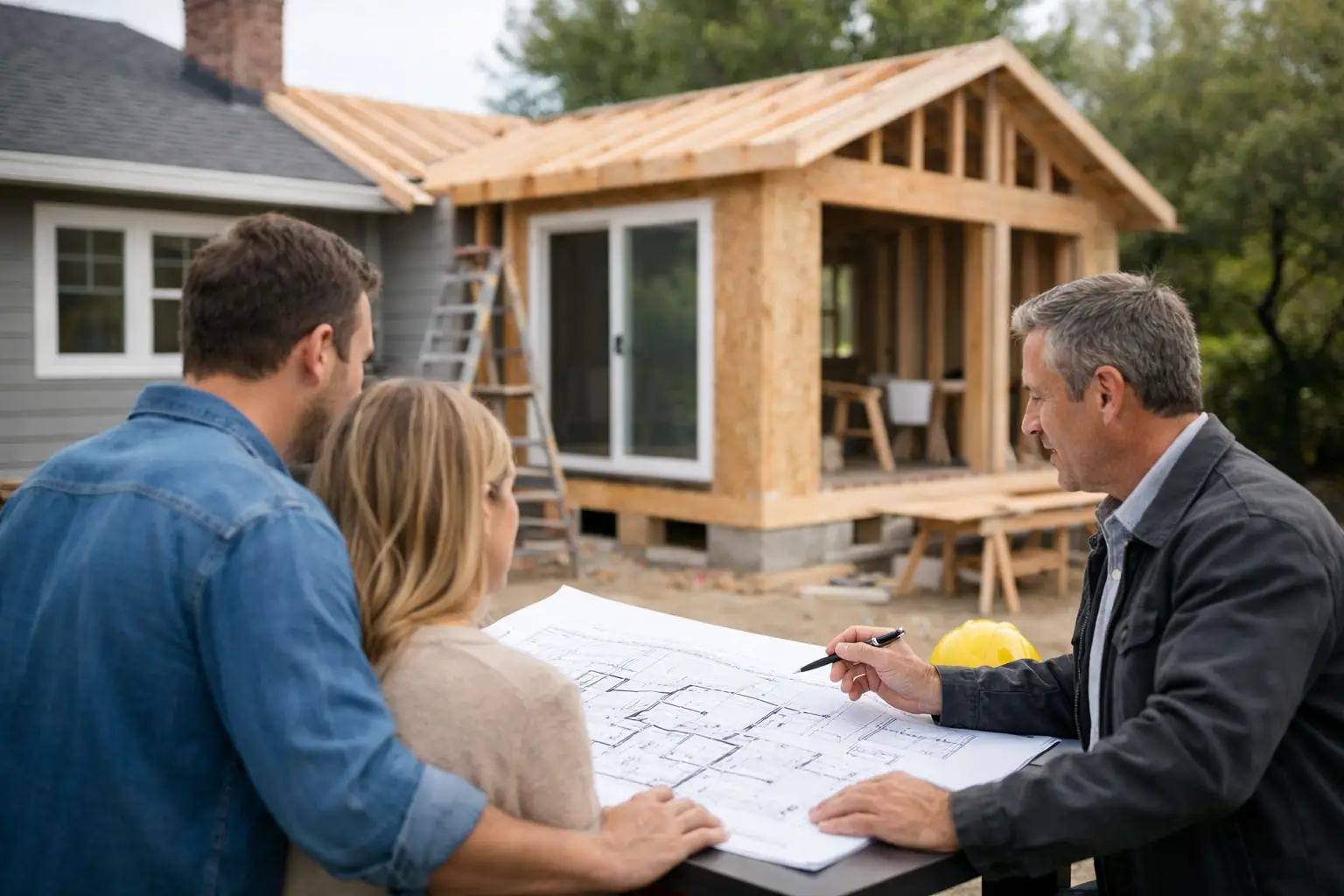
A home addition usually starts with a simple thought: we need more room. Then the questions multiply fast. The most useful questions to ask before a home addition are not just about cost or size. They are the ones that help you decide whether the project makes sense, what form it should take, and how to avoid paying for the wrong plan.
After decades of working on additions, one pattern shows up again and again. Homeowners often move too quickly into drawings, bids, or contractor conversations before they have sorted out the fundamentals. That is where expensive mistakes begin. Good early planning does not guarantee a perfect project, but it does give you a much better chance of making sound decisions.
Questions to ask before a home addition about space and purpose
The first question is simple: what problem are you actually trying to solve? Many homeowners say they need more square footage when what they really need is a better layout, more privacy, or a more useful connection between rooms. A kitchen may feel too small because traffic cuts through it. A primary bedroom may feel inadequate because it lacks a bath or closet, not because the room itself is tiny.
That leads to the next question: how much space do you truly need? Bigger is not always better. Extra square footage raises construction cost, foundation cost, roofing cost, heating and cooling load, and long-term maintenance. In many cases, a carefully planned 250-square-foot addition works better than a loosely planned 500-square-foot one.
You should also ask who the space is for, and for how long. A family room for young children has different priorities than an in-law suite, a home office, or an aging-in-place bedroom and bath. The right answer depends on whether this addition is meant to solve a five-year problem or support the way you want to live for the next twenty years.
Will the addition fit the house and the lot?
One of the most overlooked questions to ask before a home addition is whether the house can accept the addition gracefully. Not every home has the right proportions, rooflines, window rhythm, or site conditions to support every idea. A good addition should feel like it belongs there. If it looks tacked on, the problem is usually not just appearance. That same mismatch often shows up inside as awkward circulation, strange ceiling transitions, or rooms that never feel fully integrated.
Ask whether the lot allows the expansion you have in mind. Setbacks, easements, lot coverage limits, septic constraints, drainage issues, and topography can all reduce what is realistically possible. A rear addition that looks easy on paper may run directly into zoning limits or site work costs that change the whole equation.
You should also consider the structure of the existing house. Can the current foundation, framing, and roof configuration support the type of addition you want? A second-story addition, for example, raises very different feasibility questions than a one-story bump-out. It is better to learn those limits early than after you have paid for plans built around assumptions that do not hold up.
What will this project really cost?
Most homeowners ask about cost, but the better question is: what is the realistic all-in budget for this kind of project in this location? Construction is only part of the total. Design fees, engineering, permits, surveying, site work, utility changes, finish selections, and contingencies all matter.
Another important question is what level of finish you expect. Two additions with the same square footage can have very different costs depending on foundation complexity, roof integration, windows, cabinetry, tile, structural work, and mechanical upgrades. If your expectations are closer to a custom renovation than a basic box of extra space, your budget needs to reflect that.
It also helps to ask what could cause the budget to grow. Hidden conditions are common in remodeling. Older homes may have framing surprises, outdated wiring, undersized service, drainage problems, or foundation issues. You cannot predict every issue, but you can plan with enough realism that a surprise does not derail the whole project.
Should you move, remodel, or add on?
This is not always the question people want to ask, but it is often the right one. If the house has deeper limitations such as a poor lot, a weak floor plan, low ceilings, limited storage, or a neighborhood that no longer fits your needs, an addition may not solve the real problem.
Ask yourself what you would gain by staying and adding versus moving. Sometimes the right answer is still to add on, especially if you like your location, your schools, your yard, or the character of the home. But it is worth comparing the true cost and disruption of an addition with the cost of buying a different house. The better decision is the one that solves the whole problem, not just the most obvious part of it.
Who should you talk to first?
Homeowners often assume the next call should be to a contractor or architect. Sometimes that works. Sometimes it leads to a project getting shaped too early by one perspective. A contractor may focus on buildability and budget. An architect may focus on design possibilities. Both are valuable, but neither is automatically serving as your independent advisor in the earliest planning stage.
Before hiring anyone to draw plans or price construction, ask what kind of guidance you need first. If you are still sorting through options, trying to test feasibility, or deciding how much space makes sense, an early planning conversation can save substantial time and money. This is where a second opinion or home addition strategy review can be extremely useful.
What will daily life look like during construction?
A home addition is not just a design and budget decision. It is also a living-through-it decision. Ask whether you can realistically stay in the house during the work. The answer depends on the type of addition, where it connects to the home, and how much of your existing living space gets disrupted.
A kitchen expansion, major first-floor addition, or second-story project can affect utilities, access, weather protection, and basic daily routines. If you have children, pets, work-from-home needs, or health concerns, those practical issues matter just as much as floor plans. Sometimes the least disruptive design option is not the cheapest, but it may still be the better choice.
Will the addition improve the way the whole house functions?
This is one of the most valuable questions to ask before a home addition because it shifts the focus from the new square footage to the house as a whole. A good addition should not simply add a room. It should improve circulation, natural light, privacy, storage, and how the existing spaces relate to each other.
Ask whether the project creates any new problems. Does it make another room dark? Does it push the entry into an awkward location? Does it create a long hallway that wastes square footage? Does it leave the old part of the house feeling chopped up or secondary? Sometimes the smartest addition includes selective remodeling of adjacent rooms so the final result feels cohesive.
Are you planning for resale, long-term living, or both?
You do not need to treat resale as the only measure of value, but you should be honest about your priorities. If this is your long-term home, comfort and functionality may matter more than strict resale math. If you expect to sell in a few years, market appeal becomes a bigger factor.
Ask whether the addition is consistent with the neighborhood and with the value range of nearby homes. Overbuilding is possible, but so is underthinking a project that should have stronger long-term value. The answer depends on location, house type, and buyer expectations in your market.
Do you have a clear roadmap before you spend serious money?
The final question ties everything together: do you have enough clarity to move forward with confidence? That means understanding your priorities, your site constraints, your realistic budget range, your design direction, and the trade-offs involved. Without that clarity, it is easy to approve plans that look good on paper but do not hold up under real-world conditions.
This is why early planning matters so much. Thoughtful guidance at the front end can help you avoid spending thousands on the wrong design path, comparing bids that are not truly comparable, or committing to a project scope that never matched your goals in the first place. At Addition Doctors, that early stage is where independent advice can make the biggest difference.
The right addition is rarely the one that starts fastest. It is the one that begins with clear thinking, honest questions, and a plan that fits your house, your budget, and the way you actually want to live.