
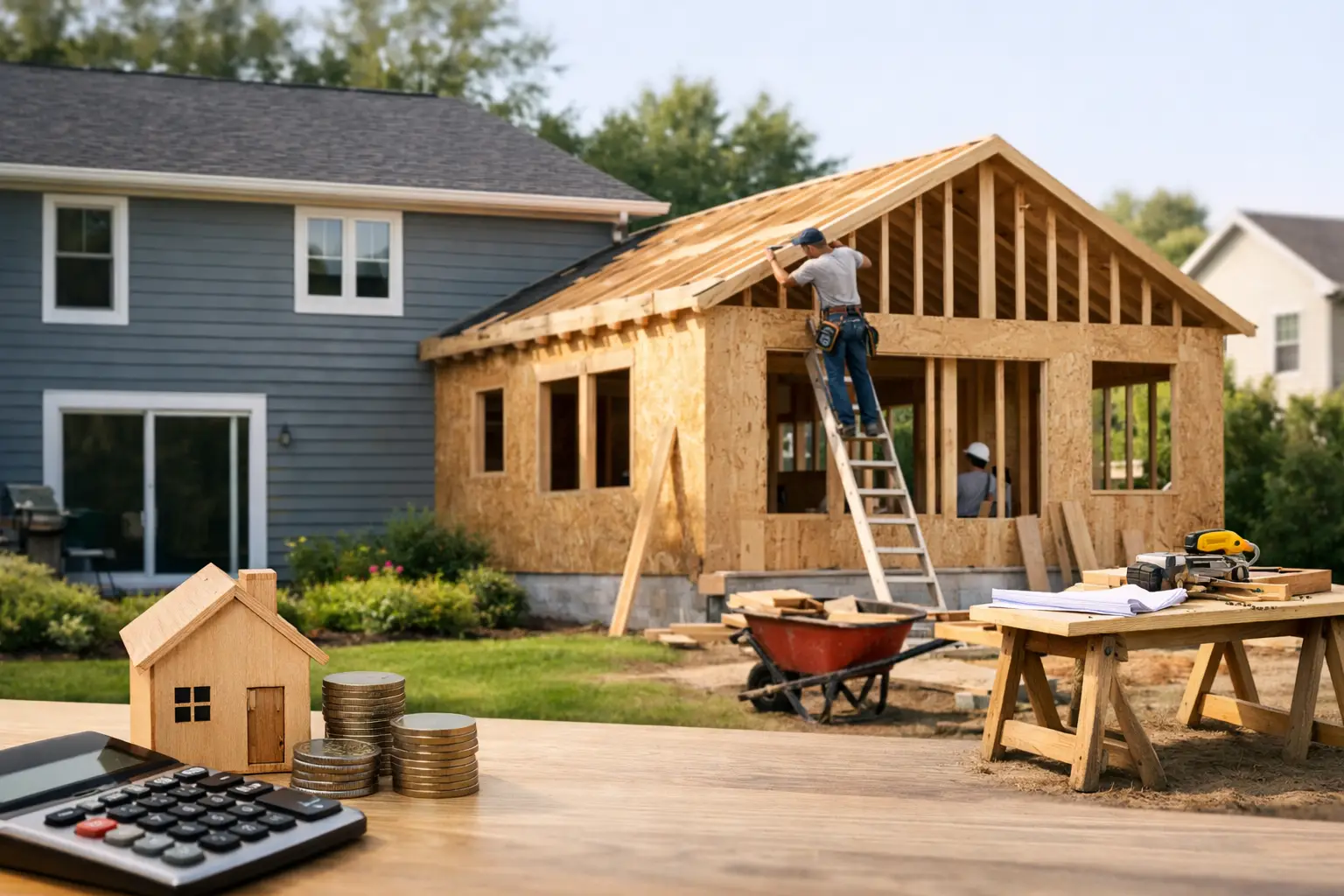
A new primary suite may solve a growing family’s space problem. A kitchen expansion may make an older house finally work. But before plans move forward, many homeowners ask a reasonable financial question: will an addition trigger property taxes?
Usually, an addition can increase your property taxes, but it does not work the same way in every city, county, or state. The size, type, and value of the addition matter. So do local assessment practices, exemption rules, and when the assessor recognizes the completed work. A permit alone does not always mean an immediate tax increase, and construction cost is not automatically added dollar-for-dollar to your assessed value.
The useful question is not simply whether taxes will rise. It is: How will your local assessor value this particular improvement, when will that value take effect, and what does it mean for the long-term cost of staying in your home?
Will an Addition Trigger Property Taxes? Usually, Yes
A home addition is generally considered a capital improvement. It adds finished space, utility, function, or market value to the property. When the local assessor updates the home’s assessment to reflect that improvement, the taxable value may rise, which can raise the annual property tax bill.
That does not mean every project produces the same result. A 500-square-foot primary suite with a bathroom has a very different assessment impact from a modest unfinished storage area. A new second story, attached garage, in-law suite, or large kitchen expansion may also affect value differently because each changes how the home functions in the local market.
In my experience, homeowners can get caught off guard when they focus only on the construction budget. They may understand that a $250,000 addition has a cost, but they have not allowed for the ongoing ownership cost that follows: higher taxes, higher insurance, additional heating and cooling, and future maintenance. Thoughtful planning means looking at the entire picture before deciding how much house to add.
Why a Permit Can Lead to a Reassessment
Building permits are one of the main ways assessors learn that a property has been improved. In many jurisdictions, permit information is shared with the assessor’s office. That may lead to a field visit, a request for details, or an updated property record after work is complete.
A permit is not itself a property tax bill. It is a record that authorized work is underway. The assessor still has to determine whether the work changed the taxable value of the home and, if so, by how much.
The timing varies. Some assessors inspect or update records during construction. Others wait until the addition receives a final inspection or certificate of occupancy. In some places, the new assessment takes effect on a defined assessment date, so a completed addition may not affect the tax bill until the next tax cycle.
Unpermitted work is not a sound strategy for avoiding an assessment. Aside from safety, code, insurance, financing, and resale concerns, unpermitted improvements can still be discovered later. Correcting the issue may be more expensive and stressful than planning for the tax impact from the beginning.
Assessed Value Is Not the Same as Construction Cost
This distinction matters. Your contractor’s price reflects labor, materials, site conditions, overhead, local demand, and the complexity of your design. Your assessor is estimating the value added to the property under local assessment rules. Those figures may be related, but they are not identical.
For example, difficult foundation work, drainage corrections, or structural upgrades can consume a meaningful part of an addition budget without producing comparable visible value in an assessment. On the other hand, adding a legal bedroom and bathroom in a market where those features are scarce may contribute substantially to assessed value.
Assessors may use sales comparisons, cost-based methods, or standardized valuation schedules. They may also distinguish between finished and unfinished space, heated and unheated space, attached and detached structures, and living area versus utility space. A well-designed addition that feels original to the house can improve market appeal, but its assessment outcome still depends on the local system.
The Tax Increase Depends on More Than the New Assessment
Property taxes are generally based on assessed value and local tax rates. If an addition increases assessed value, the bill may rise. But the exact increase depends on the rate applied in your area, along with exemptions, assessment caps, and other local rules.
Some states or localities limit how quickly assessed value can increase for an owner-occupied primary residence. Others allow the assessor to add the value of new construction even when the existing home’s value is protected by a cap. In that situation, the original house may retain certain protections while the addition is assessed separately as new value.
Homestead exemptions can also matter. If you qualify for an owner-occupant exemption, make sure it remains in place after the property record is updated. Senior, veteran, disability, and other exemptions may offer additional protection in certain locations, although eligibility requirements vary widely.
There is also a practical timing issue. Local tax rates can change independently of your project. Even if you estimate the assessment impact accurately, a future tax bill can still move because school districts, counties, municipalities, or special taxing districts adjust their rates.
How to Estimate the Impact Before You Build
You do not need a perfect prediction to make a good decision. You do need a reasonable range before committing to a design that stretches your budget.
Start with your current property tax bill and property record. Confirm the existing assessed value, exemptions, square footage, bedroom and bathroom count, and any features that may be relevant to the proposed addition. Errors in the current record are worth correcting, but you should understand that an update can also bring the property information under closer review.
Then contact the local assessor’s office with a focused description of the project. Explain the approximate square footage, intended use, whether space will be heated and finished, and whether bathrooms, kitchens, or a separate dwelling unit are involved. Ask how new construction is assessed, when it is added to the roll, and whether any owner-occupant protections apply to the improvement value.
It also helps to ask these questions before design is far along:
- Is new construction assessed at full market value, a percentage of value, or by a local cost schedule?
- Will the assessor inspect the work during construction or after final approval?
- Does a homestead cap apply to the addition, the existing home, or both?
- Are there special assessments or utility charges associated with adding living area?
- Can the office provide examples of how similar finished space is classified?
The goal is not to force a precise promise from an assessor who cannot make one. It is to identify the rules that shape the outcome and build a realistic annual allowance into your household budget.
Design Choices Can Change the Tax Conversation
Early planning gives you options. Adding a full bath, plumbing for a future kitchen, a separate entrance, or an accessory dwelling unit may be exactly right for your family. Each can also affect valuation, permitting complexity, utilities, and local zoning requirements.
Likewise, a second-story addition may add valuable living area without expanding the home’s footprint, but it can require major structural work. A first-floor rear addition may be simpler for aging in place and may connect better to the yard, yet it can reduce outdoor space or require site work. Taxes should not dictate the design, but they belong in the same practical discussion as budget, function, and resale value.
This is one reason an independent feasibility review can be valuable before homeowners pay for full plans. The strongest addition is not always the largest one. It is the one that solves the real problem, fits the original home, respects the site, and remains financially comfortable after construction is over.
If the New Assessment Looks Wrong
After an addition is complete, review the updated assessment carefully. Check the recorded square footage, finished area, number of baths, quality classification, and any assumptions about the project. An assessor may be working from permit descriptions, inspection notes, or standardized data that does not fully capture the finished condition.
If you believe the value is incorrect, learn the local appeal deadline immediately. These deadlines can be short. Gather plans, permits, photographs, invoices that clarify what was actually built, and sales information if your jurisdiction considers it relevant. An appeal is not about arguing that the project was expensive or that you dislike a higher bill. It is about showing that the assessment does not reflect the property’s value or classification under the applicable rules.
Before you decide how large or elaborate an addition should be, include taxes in the project roadmap. A few informed calls and a realistic estimate early on can help you choose a project that still feels like a good decision years after the last construction invoice is paid.