
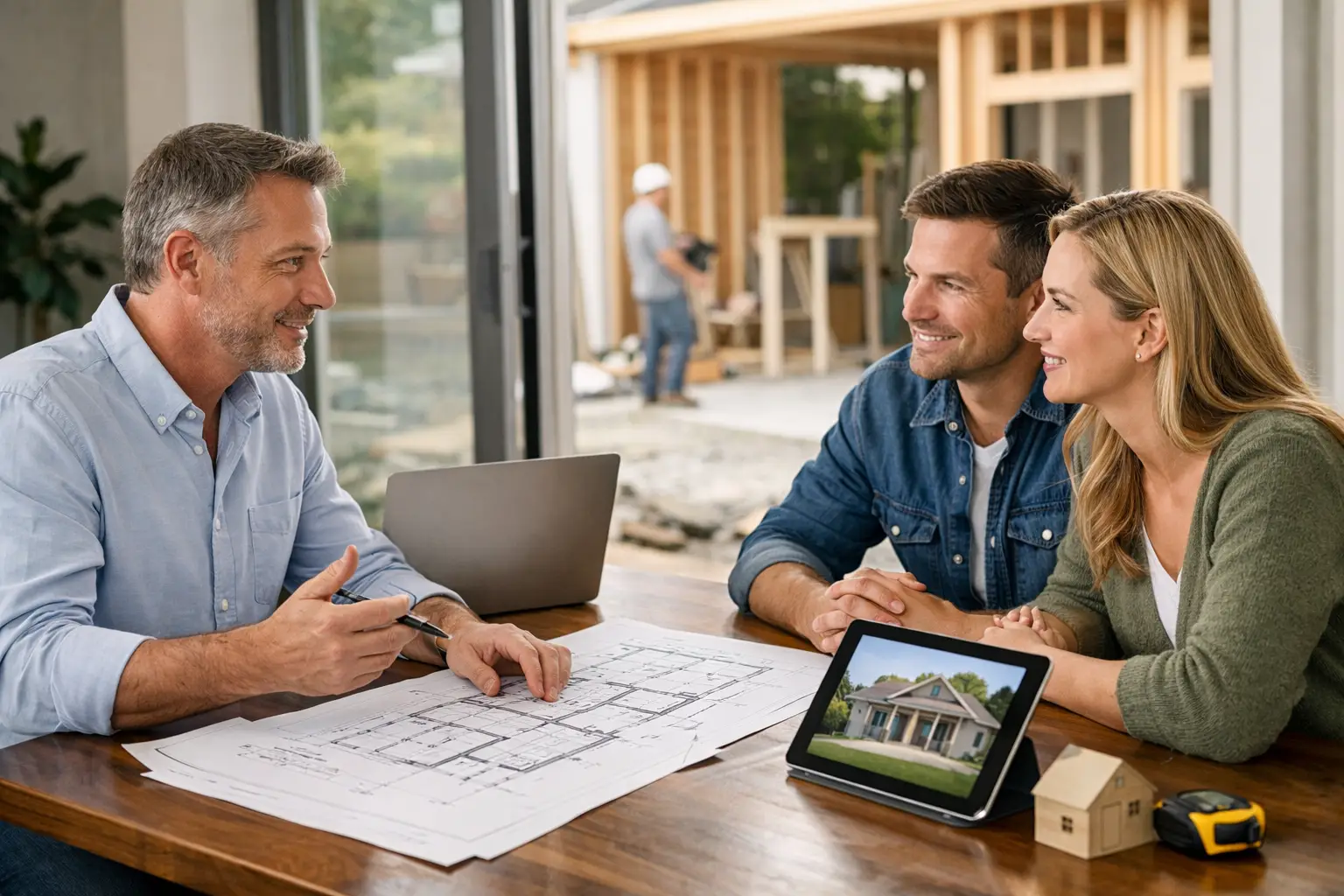
Most home additions do not go wrong because a family lacked vision. They go wrong because key decisions were made too early, with too little independent guidance.
That is where an independent home addition advisor can make a real difference. Before you hire an architect, designer, or contractor, you need someone who is focused on one thing only – helping you think clearly about the project. Not selling design services. Not trying to win the build. Not steering you toward a bigger scope than you need. Just experienced advice, grounded in what actually works.
What an independent home addition advisor really does
A lot of homeowners assume the first step is to call a contractor or start collecting plans. In practice, that can be where confusion begins. You may know you need more space, but not exactly how much. You may have a rough budget, but not a realistic one. You may have a vision for the house, but no clear sense of whether the addition will fit the lot, the structure, or the character of the home.
An independent home addition advisor helps sort out those questions before they become expensive commitments. The role is not to replace an architect or contractor. It is to help you get ready to use those professionals wisely.
That usually means talking through how you live now, what is not working in the house, what kind of addition may solve the problem, and what trade-offs come with each path. Sometimes the right answer is a family room addition. Sometimes it is a kitchen expansion. Sometimes a second story makes more sense than building out. And sometimes the best advice is that an addition may not be the smartest investment for that particular house.
That kind of objectivity matters. Once plans are underway, it becomes harder to step back and question the direction. Early planning is where the biggest mistakes can be prevented.
Why independence matters so much early in the process
Homeowners often tell me the same thing: “We just want to know what makes sense before we start spending real money.” That is a reasonable goal, and it is also where many people get tripped up.
When the first person you talk to is also hoping to design the project or build it, the advice may still be good, but it is not fully independent. That does not mean professionals are acting in bad faith. It simply means their role and yours are not perfectly aligned yet.
An advisor who is independent can help you ask better questions. Do you actually need 800 more square feet, or do you need a better layout? Will the addition improve the flow of the house, or create awkward transitions? Does the proposed work respect the rooflines, window patterns, and proportions of the original home? Is the budget supporting the idea you have in mind, or are you headed toward disappointment before design even begins?
Those are not small details. They shape everything that follows.
The decisions that should happen before design begins
A good set of plans starts with good thinking. That sounds obvious, but many projects skip this step and move straight into drawings.
Before hiring a design or construction team, homeowners should have a reasonably clear answer to a few foundational questions. What is the real problem the addition is solving? How should the new space connect to the existing house? What is worth prioritizing if budget becomes tight? What parts of the home must stay consistent in style, scale, and feel?
There is also the practical side. Site limitations, local zoning, structural realities, roof connections, and circulation patterns can all shape what is feasible. A concept that looks good in the abstract may become costly or awkward once those conditions are considered.
This is where experience matters. Someone who has spent decades working on additions can usually spot concerns that homeowners may not know to raise yet. The issue may be privacy from a neighboring property, a poor stair location in a second-story plan, an oversized addition that overwhelms the original house, or a kitchen expansion that solves one problem while creating three others.
An advisor helps bring those concerns into the conversation early, when changes are still easy to make.
Independent home addition advisor or architect first?
It depends on how clear your direction already is.
If you have a well-defined project, a realistic budget, and a strong understanding of what the house can support, you may be ready to go directly to an architect or residential designer. But many homeowners are not there yet. They have ideas, photos, and frustrations with the current house, but they do not have a clear project roadmap.
In those cases, speaking with an independent home addition advisor first can save time and money. You can test ideas before paying for formal design work. You can narrow the scope. You can identify likely challenges. And you can move into the design phase with clearer priorities, which often leads to better plans and fewer revisions.
Think of it as front-end clarity. The more thoughtful the early planning, the more useful every later step becomes.
What homeowners often get wrong about additions
The most common mistake is assuming that more square footage automatically solves the problem. It does not always. I have seen projects add substantial space while still leaving the home awkward, disconnected, or out of balance.
Another common mistake is treating the new addition as a separate project rather than part of a whole house. A successful addition should feel like it belongs. It should respect the scale, architecture, and circulation of the original structure. If it looks tacked on from the outside or feels disconnected on the inside, the project may add space without really adding value.
Budget misunderstandings are also common. Homeowners sometimes begin with a target number based on outdated assumptions or rough online estimates. Then the design moves forward as if that number is workable. By the time bids come in, expectations and reality are far apart. A feasibility review early in the process can help avoid that problem.
And then there is timing. People often underestimate how many choices need to be made before construction even begins. If you start without a roadmap, the project can become reactive. Reactive projects are usually more stressful and more expensive.
What to expect from experienced guidance
Good advisory support should leave you feeling clearer, not pressured. You should come away with a better understanding of your options, the likely challenges, and the decisions that need to happen next.
That might include reviewing whether your addition goals match the house itself. It might involve concept layout thinking to test how rooms should connect. It may mean discussing whether to build up or out, or whether the investment makes sense compared to moving. In some cases, it also means reviewing design ideas or contractor bids and helping you compare them with a more informed eye.
The value is not just technical. It is strategic. Homeowners need space to think before they commit. They need someone who can say, with honesty, “This part makes sense, but this part deserves another look.”
That is often what creates confidence.
Who benefits most from this kind of advice
Not every project needs an advisor. But many do, especially when the stakes are high.
If you are trying to decide between several addition options, weighing move-versus-add decisions, planning a major investment, or feeling uncertain about where to begin, independent guidance can be extremely useful. It is especially valuable for homeowners who want the addition to feel integrated with the original home rather than oversized or out of character.
This is also helpful for people who do not want to be rushed into drawings or contractor conversations before they understand the bigger picture. There is nothing wrong with slowing down long enough to make better decisions.
After more than 40 years in home additions, that is often the difference between a project that simply gets built and one that truly works.
Thoughtful planning will not remove every challenge from an addition project. But it can help you avoid the expensive, preventable ones – and that is usually where the smartest projects begin.