
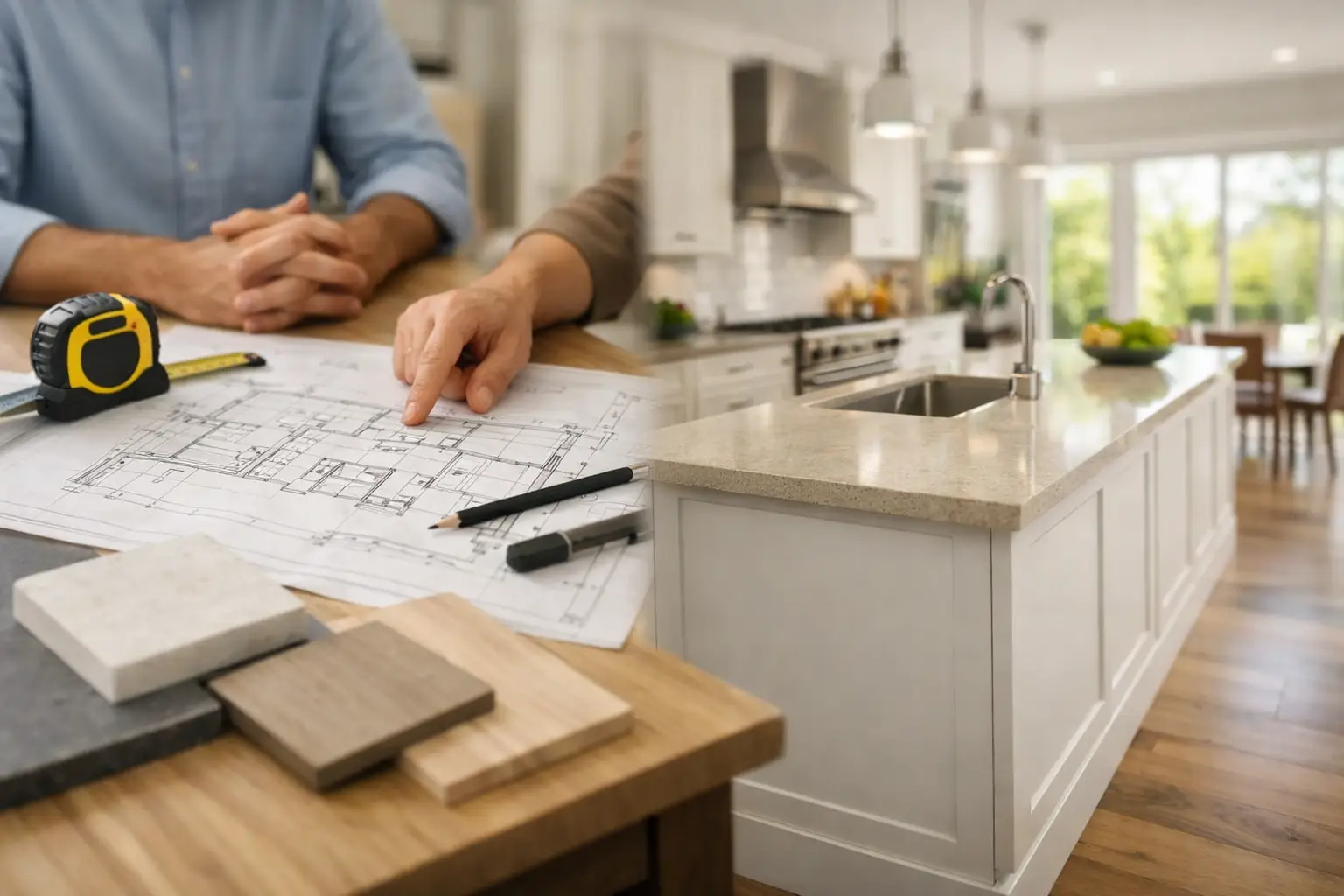
A kitchen that feels one step behind your daily life usually does not need more cabinets. It needs better thinking before anyone starts drawing walls. That is where kitchen expansion planning becomes so valuable. The right plan helps you decide whether you truly need more square footage, where that space should come from, and how to improve function without creating expensive problems elsewhere in the house.
Homeowners often start with a simple goal: make the kitchen bigger. Fair enough. But bigger is not always better, and it is rarely cheaper than expected. In many homes, the kitchen is tied to circulation, structural walls, windows, plumbing locations, ceiling heights, and the visual balance of the exterior. Once you start pushing the kitchen outward or borrowing space from adjacent rooms, small decisions begin affecting the whole house.
That is why good planning starts with a question that sounds basic but saves money: what is not working now? Sometimes the answer is obvious. There is not enough prep space, the refrigerator blocks circulation, or multiple people cannot use the room at once. Other times, the problem is less about size and more about layout. A kitchen with poor traffic flow can feel cramped even when it has plenty of square footage.
What kitchen expansion planning should solve
A thoughtful kitchen expansion should improve how the room works, not just how it photographs. That means looking at storage, prep zones, appliance placement, natural light, seating, and how the kitchen connects to nearby spaces. If the kitchen opens to a family room, mudroom, dining area, or backyard, those relationships matter as much as the kitchen itself.
In my experience, homeowners often underestimate how much circulation drives success or failure. People need room to move around an island, pass behind stools, open appliances, and carry groceries in from the garage or driveway. A few extra feet in the wrong place does not fix those issues. A well-considered rework of movement patterns often does.
There is also the question of proportion. The expanded kitchen should feel like it belongs in the house. If the room becomes oversized compared to surrounding spaces, it can feel disconnected or awkward. The same issue shows up on the exterior. A kitchen bump-out that ignores rooflines, windows, and massing may solve an interior problem while creating an exterior one.
Start with the house, not the wish list
One of the most common planning mistakes is designing the new kitchen around a list of desired features before understanding the limits of the existing home. A large island, walk-in pantry, six-burner range, and wall of glass may all sound appealing, but they may not fit your home’s structure, lot setbacks, or budget.
Kitchen expansion planning works best when you begin with what the house can reasonably support. Can the kitchen grow into an adjacent dining room? Is there an underused breakfast area that could be absorbed? Would a small rear addition solve the problem more effectively than removing walls inside the existing footprint? These are feasibility questions first, design questions second.
That distinction matters. Homeowners sometimes spend money on plans built around assumptions that were never tested. Then they find out a load-bearing wall complicates the layout, a foundation issue affects the addition cost, or zoning limits how far the house can extend. Early planning should identify those issues before you are deeply invested in one solution.
The square footage question
Not every kitchen needs a major addition. In some homes, 80 to 120 well-used square feet changes everything. In others, the real need is not more kitchen space but better support space nearby, such as a pantry, mudroom, or beverage area. If you solve the pressure points around the kitchen, the kitchen itself often performs much better.
This is where trade-offs become important. Expanding into an adjacent dining room may improve the kitchen, but it can also eliminate a space your family still uses. A rear addition may preserve interior rooms, but it can increase cost, complicate the roof, and reduce yard space. There is no universal right answer. The best option depends on how you live and what the house can absorb gracefully.
Budget decisions happen early, whether you realize it or not
Many homeowners think budgeting starts after plans are complete. In reality, budget direction starts the moment you choose the type of expansion. Borrowing interior space, opening a structural wall, and building a full addition are very different decisions financially.
A kitchen project becomes expensive quickly because it layers costs. You are not only adding or changing structure. You are also dealing with cabinetry, countertops, appliances, finishes, lighting, flooring, plumbing, electrical work, and often HVAC adjustments. If the expansion changes windows, doors, or foundations, costs rise again.
That does not mean you should avoid the project. It means kitchen expansion planning should include realistic cost thinking from the beginning. If your budget is better suited to an interior reconfiguration than a full addition, it is far better to know that early than after design fees have already added up. The strongest plans balance goals with financial reality instead of pretending those two things will sort themselves out later.
Layout choices that age well
A good kitchen should work for your household now and still make sense years from now. That does not mean trying to predict every future detail. It means avoiding trendy decisions that sacrifice function, and creating a room that can adapt as needs change.
An oversized island, for example, can be useful, but only if it improves workflow rather than turning the kitchen into a hallway around a giant object. Open shelving may look attractive in photos, but many families need practical enclosed storage. A wide-open plan may feel airy, yet some households benefit from partial separation between cooking areas and living spaces.
This is also where aging-in-place thinking can be useful, even if retirement feels far away. Wider walkways, sensible appliance placement, and easy access to everyday storage are not special-needs features. They are simply good planning.
Kitchen expansion planning and the rest of the home
The best kitchen additions do not feel like add-ons. They feel inevitable, as if the house always should have worked that way. Achieving that takes more than interior layout. It requires attention to scale, ceiling transitions, window placement, exterior materials, and how the new kitchen connects visually to the original structure.
This is often where independent advice helps most. An architect or designer may produce attractive drawings. A contractor may focus on buildability and cost. Both are important. But before hiring either one, homeowners benefit from stepping back and asking whether the concept itself makes sense. Does it solve the right problem? Does it fit the house? Are you spending money in the place that will create the most daily value?
A kitchen expansion that ignores those questions can leave you with a larger room and lingering frustration. I have seen projects where homeowners gained square footage but still had poor appliance placement, awkward traffic flow, or a new exterior that looked out of character with the original house. Those problems are much easier to prevent than to fix later.
Questions worth answering before design begins
Before you move into formal design, try to get clear on a few practical issues. How many people use the kitchen at one time? What paths through the room need to stay clear? Do you really need an addition, or would better use of nearby space solve the problem? What is your comfortable investment range, not your optimistic one? And if the kitchen grows, what does that do to adjacent rooms, exterior appearance, and resale appeal?
Those answers create a project roadmap. They also help you compare options more intelligently. A smaller, smarter expansion may outperform a much larger one if it improves flow and preserves the house’s proportions.
For homeowners at the beginning of this process, that is often the biggest shift in thinking. Kitchen expansion planning is not about chasing the biggest possible room. It is about making careful decisions before design fees, contractor bids, and construction costs start pushing the project in directions you never intended.
If you take the time to understand the house, the trade-offs, and the real purpose of the expansion, you give yourself a much better chance of ending up with a kitchen that feels right every day, not just on paper.